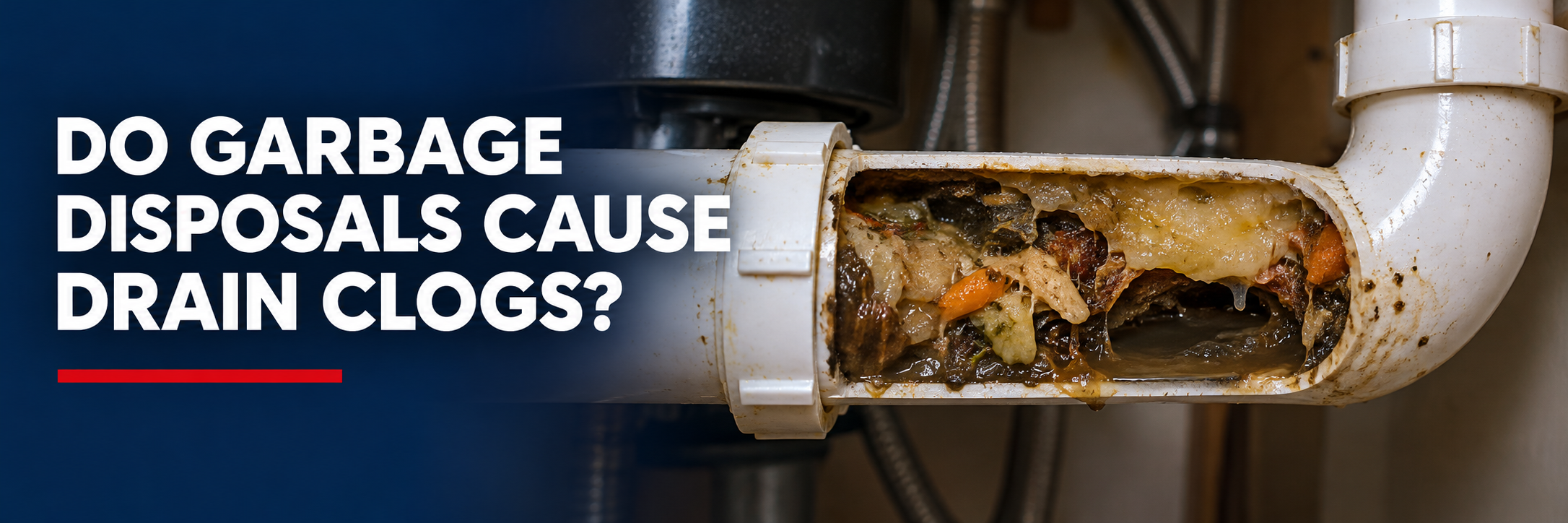
Yes, garbage disposals can contribute to drain clogs. Grinding food makes the pieces smaller, but those pieces still have to travel through your plumbing. Grease and food waste can collect in pipes and restrict the flow of water.
That doesn’t mean every home with a garbage disposal will have a clogged drain. What goes into the disposal, how it’s used, and the condition of the plumbing all matter.
Here’s what homeowners in Charleston, Summerville and surrounding communities should know.
A garbage disposal grinds food into smaller pieces and sends them down the drain with water. It doesn’t dissolve the food or make grease disappear.
Fats, oils and grease are a particular concern. Charleston Water System explains that grease can separate from hot water and accumulate in plumbing and sewer lines. Over time, buildup can restrict or block a pipe.
Food particles can also become part of deposits inside a drain. A 2024 study found that disposal-ground food particles contributed to blockages under the conditions tested. The experiment used a high-rise drainage system, so it doesn’t tell us how often a typical home’s kitchen drain will clog.
The takeaway is simple: a disposal can contribute to a clog, but having one doesn’t guarantee you’ll have a problem.
Summerville CPW’s customer guidance warns that a garbage disposal can contribute to a sewage blockage and advises keeping grease, oil and trash out.
This is a reminder that food leaving the sink still enters a drainpipe. A disposal is not a separate waste-removal system.
A problem inside the disposal and a blockage farther along the drain are not the same thing. Both can affect how your kitchen sink works, and both can happen at the same time.
Replacing the disposal won’t necessarily fix a blockage in the drainpipe. A proper assessment helps identify where the problem is before deciding what work is needed.
Homes with septic systems need extra consideration. Food waste adds solids to the material entering the tank.
The EPA recommends limiting or eliminating garbage disposal use because added solids, fats and grease can contribute to drainfield problems. Disposal use can also affect how often a septic tank needs to be pumped.
No. The research does not establish that every disposal will cause a clog or give a reliable percentage for an individual home’s risk. The evidence supports saying that a disposal can contribute to a blockage, not that a blockage is inevitable.
Have the problem checked if your kitchen sink repeatedly drains slowly, backs up when the disposal runs, or clogs again after being cleared. Wastewater backing up into other drains, multiple affected fixtures, or a leak under the sink also needs attention.
Drip Doctor Plumbing helps homeowners in Charleston, Summerville and surrounding communities with kitchen drain clogs and garbage disposal problems. We’ll work to identify the cause and explain your options.