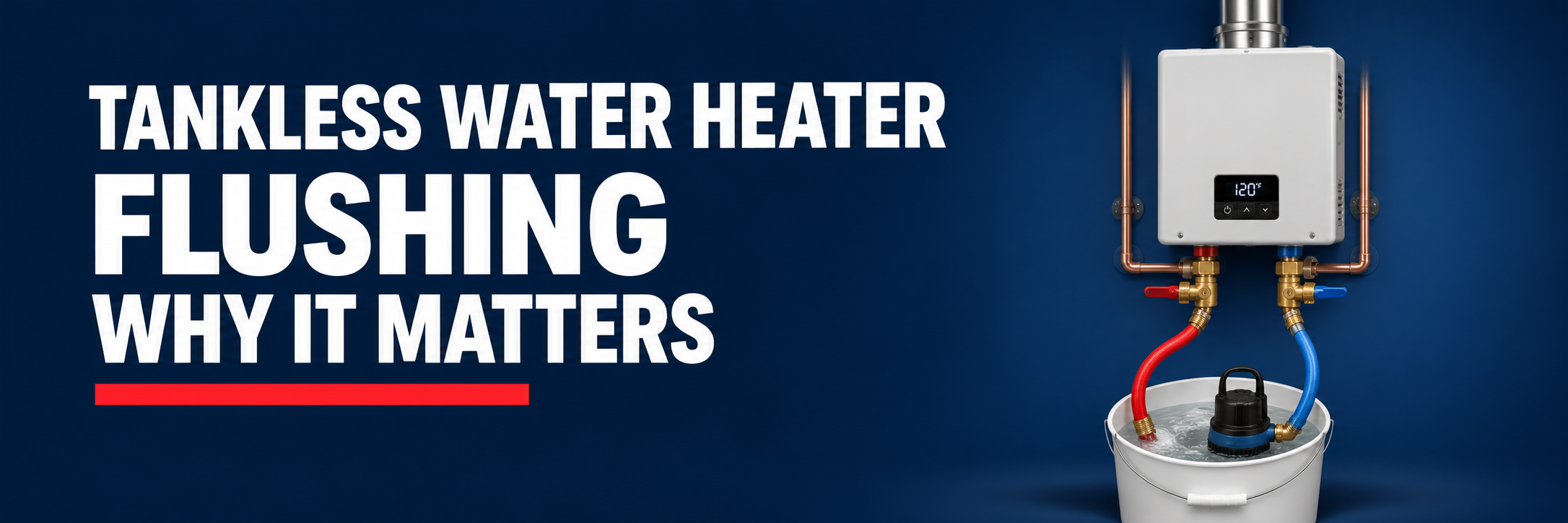
Your tankless water heater provides hot water when you need it. Like other plumbing equipment, it needs regular maintenance to keep working properly.
One important part of that maintenance is flushing, also called descaling. Flushing removes mineral buildup from inside the water heater before it has a chance to cause bigger problems.
As water moves through your tankless water heater and is heated, mineral deposits can collect inside the heat exchanger and water passages. Over time, that buildup, called scale, can make it harder for water to flow through the unit and for the heater to transfer heat.
If scale continues to build, it can contribute to reduced performance and damage to components. Navien explains how scale affects tankless water heaters.
Flushing removes mineral buildup from inside the unit. Regular maintenance also gives a plumber an opportunity to check the water heater, clean accessible filters, and look for problems that may need attention.
A tankless water heater doesn’t have a large storage tank, but water still passes through it every time you use hot water. Its internal components need attention, too.
Annual flushing is a practical maintenance schedule to discuss with your plumber. It helps you stay on top of buildup instead of waiting until you notice a problem.
Your water heater’s manufacturer may specify a different schedule, so check the instructions for your model. An annual inspection and a flush are also separate services. For example, Rinnai’s RX/RXP manual calls for an annual inspection by a trained, qualified professional and provides separate flushing guidance.
The water heater is isolated, and an appropriate descaling solution is circulated through its water passages to remove mineral buildup. The unit is then rinsed and checked for proper operation.
The solution, circulation time, and procedure depend on the manufacturer and model. Cleaning the water inlet filter is a separate task and may also be needed as part of maintenance.
It can help if mineral buildup inside the water heater is restricting flow. But a clogged filter, a fixture problem, or another plumbing issue can also cause low flow.
A proper evaluation helps identify the cause before assuming that a flush will fix it. The same applies to fluctuating temperatures or error codes.
It can. Some manufacturers exclude certain damage caused by scale buildup. Review the warranty and maintenance instructions for your specific unit, and keep your service records.
One missed flush does not automatically void every part of a warranty. Coverage depends on the warranty terms and the cause of the problem.
Don’t wait for a hot-water problem to think about maintenance. Call or text Drip Doctor Plumbing to discuss flushing and servicing your tankless water heater.
Serving Charleston, Summerville, and surrounding communities.